

BLOG #1: Introduction to Blind Boxes
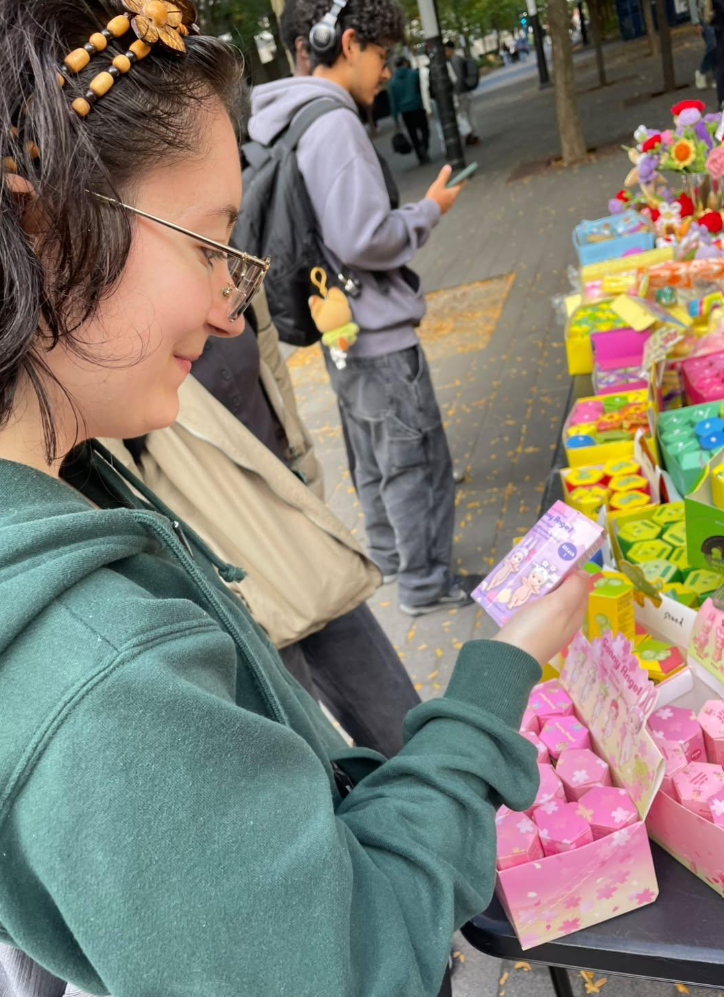
Picture this: It’s 1980s Japan, you are walking down the street and pass in front of Matsuya department store. You decide to go inside; maybe you’ll find an early birthday present for mom. At the register, your eye catches on some mysterious bags. The cashier notices and asks if you’d like to buy one. Curiosity has you saying yes before your brain can even register the question. You leave the store wondering what you possibly have spent your money on. It’s a little thrilling, you think, as you open the bag. What does chance have in store for you?
This is one of the earliest forms of blind boxes (Tse, 2023), more accurately blind bags or mystery bags. However, their origin dates back even earlier; in the 1860’s. Back then, these mystery bags were called “Fukubukuro”, meaning “lucky bag”, and they were a New Year’s custom (Toy Box, 2022). Retail stores would offer them to customers at a discounted price, each bag with a different mystery trinket inside. This way, these retailers would be able to clear out unsold and unmarketable items.
A century later, toys were brought into the market with the introduction of Gachapon. These are vending machines you see at malls in which little toys are contained within capsules. The word “gachapon” comes from the sound of the handle turning (gacha), followed by the sound of the capsule landing on the tray (pon) (Wallace, 2025).
Over the decades, blind boxes have gone through various different forms. Here’s the full historical timeline, for your leisure:
Fukubukuro. | 1860s (Toy Box, 2022) |
Gachapon | 1965 (Wallace, 2025) |
Kinder surprise eggs | 1974 (Kinder, n.d.) |
Pokemon | 1996/1999 for North America (ravaver, n.d.) |
UglyDolls | 2001 (tvtropes, n.d.) |
Tokidoki | 2005 (Blind Box Empire, n.d.) |
Shopkins | 2014 (Toynk Toys, 2023) |
LOL Surprise Dolls | 2016 (Katie Hicks, 2025) |
Labubu Dolls | 2019 (Juliana Kim, 2025) |
Compared to Fukubukuro, modern blind boxes go through a detailed and complex manufacturing process. It begins with conception; creating a story and a set of characters that will be used to market the blind boxes. Different rarities may be considered – common, uncommon, rare, and limited edition collectibles. Character concepts and experiments are sketched for approval (Zhang, 2026).
After concepts are approved, 3D models are created with industry standard software. Then, materials are determined based on style and production requirements. Many blindbox figures are made from PVC, vinyl, ABS, or resin. Each figure will be painted, applied finishing, and inspected for colour matching and quality control. Limited edition figures may have special details applied such as coatings, metallic paint, or textured finishes among other features (2026).
Finally, it is time for box assembly. Many standard blind boxes use printed paperboard, while specialty editions may use magnetic rigid boxes to create a premium feel (2026).
Once the box is assembled and the figure passes through all inspections, it is packed. All that is left to do is attract you, the consumer!
So, next time you see a section of blind boxes at a retail store, try your luck. Maybe you’ll unbox a limited edition thing-a-ma-jig.

Comments